How are used steel beams inspected before reuse?
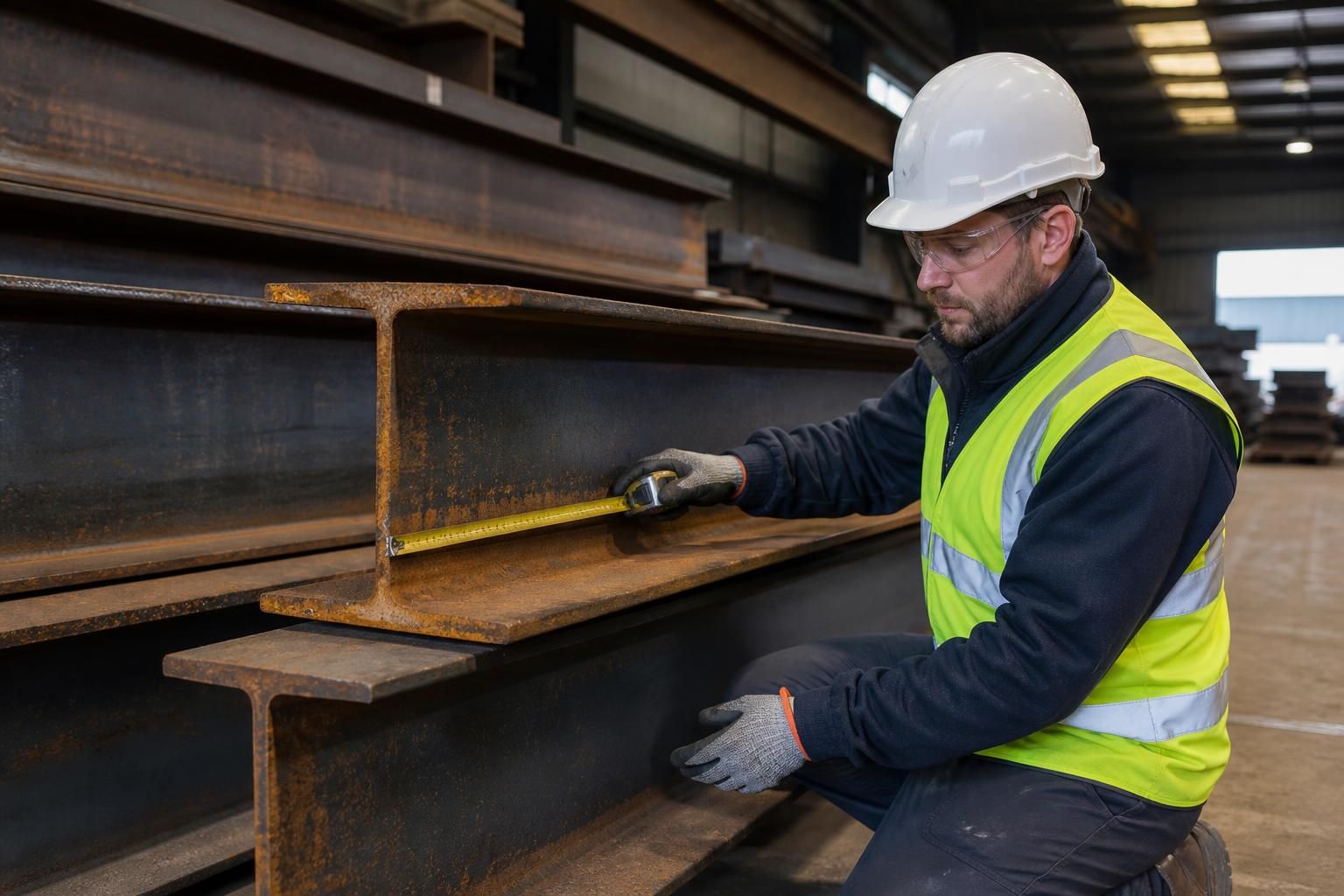
Used steel beams are inspected through a combination of visual examination, dimensional checks and, where necessary, material or non-destructive testing. Their condition, dimensions, connections and known loading history are then assessed by a suitably qualified structural professional to determine whether they are suitable for safe reuse.
Before a used steel beam is approved for reuse, its identity, condition, history and intended structural duty must be checked together. The inspection should establish whether the member has retained enough capacity for its proposed position, including the effects of corrosion, previous alterations, connection details, fire exposure and any damage sustained during removal or storage.
A typical inspection process includes the following stages:
- Establishing the beam’s history: Available drawings, fabrication records, inspection documents and information about the original building are reviewed first. Previous span, support arrangement, loading, exposure conditions and alterations can all affect the assessment. A beam that has carried mainly static loading may require a different review from one exposed to impact, vibration, heat or aggressive industrial conditions.
- Confirming its identity: The section profile, markings and any remaining identification are recorded. These details help establish the steel section type and, where records exist, its grade and original specification. If the markings are missing or unreliable, the uncertainty is taken into account rather than assuming the most favourable material properties.
- Checking for defects and alterations: Inspectors look for pitting, localised section loss, distortion, buckling, cracking, gouges, drilled holes, cut-outs, welded attachments and signs that the member has been shortened or modified. Particular attention is paid to flange edges, web openings, bearing areas and regions around old connections, as defects in these locations can have a greater structural effect than superficial surface rust.
- Assessing corrosion: Rust is not judged by colour alone. Loose scale is removed where necessary so that the remaining steel can be examined, and areas of deepest loss are recorded. Local pitting and reduced thickness may affect shear, bending, buckling or the ability of a connection to transfer force. The assessment therefore considers the pattern and location of corrosion, not just the overall appearance of the beam.
- Examining connections: Bolt holes, welds, end plates, cleats and other attached components are inspected for cracking, elongation, distortion, poor fit, corrosion and evidence of overstressing. Existing connection details may not suit the proposed building, so the beam and its connections are considered separately when preparing the reuse design.
- Using additional testing where justified: Non-destructive examination can investigate suspected cracks, weld quality or hidden discontinuities without cutting the member apart. Thickness measurements can quantify corrosion, while material testing may help identify steel properties when documentation is incomplete. Testing is selected according to the uncertainty being investigated; it is not automatically required for every beam.
- Reviewing removal and storage damage: Lifting, transport and stacking can introduce damage that was not present in the original structure. Inspectors check for impact marks, twisted flanges, bent webs and new distortion, particularly at lifting points and supports. Surface preparation or coating removal is also considered, because it may reveal defects that were previously concealed.
- Carrying out the engineering assessment: The recorded condition is compared with the proposed span, supports, loads, restraint and connection arrangement. Calculations may consider bending, shear, deflection, local buckling, lateral stability and any reduction in capacity caused by corrosion or alterations. The result may be approval for the proposed use, approval subject to repair or strengthening, restriction to a less demanding application, or rejection.
The inspection findings should be recorded with identified marks, photographs, measurements, test results and any limitations on the assessment. This creates a traceable basis for the structural design and makes clear which assumptions must be verified before installation.
Reuse should not be decided from a visual inspection alone. A beam can appear sound while having uncertain material properties, concealed cracking, inadequate connection zones or a history that makes its capacity difficult to establish. Conversely, limited surface corrosion may be acceptable if the remaining section and proposed duty are properly assessed. The final decision should therefore be made by a suitably qualified structural professional using the inspection evidence and the requirements of the new building.
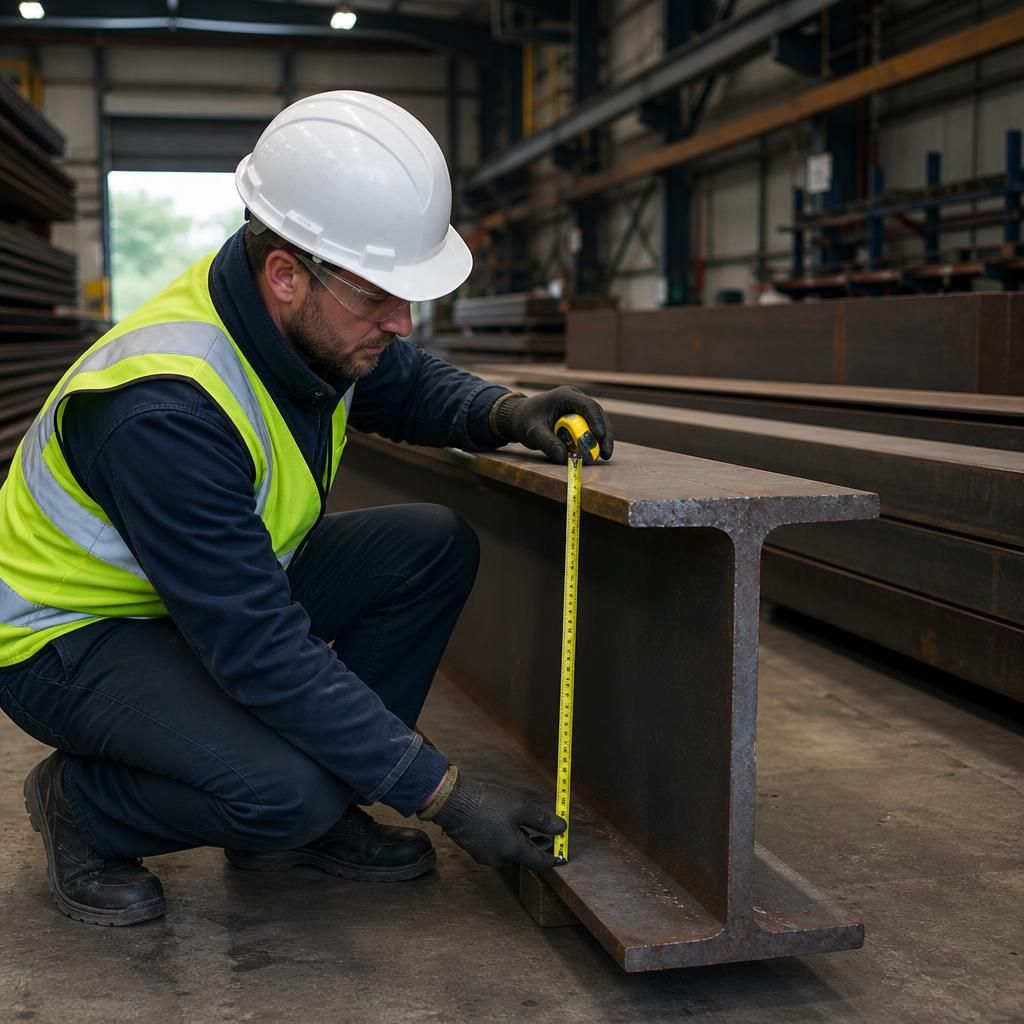
Inspection also confirms whether a used beam can be incorporated accurately into the proposed structure. The survey records its as-found geometry, including straightness, twist, end condition, flange alignment and the position of existing holes or attachments. These details matter even where the steel retains adequate strength, because a distorted member or misplaced connection may not fit the new support arrangement.
The design should therefore be based on the beam’s measured condition rather than nominal new-section dimensions. Any mismatch between the inspected member and the drawings can then be addressed through revised detailing, suitable preparation or a different position within the building before fabrication and installation begin.
Need help assessing used steel beams for reuse?
If you are considering used steel beams for a new building, speak to Buildings UK Ltd about the available inspection information, proposed application and design requirements. This can help establish what further structural assessment or detailing is needed before reuse is specified.