
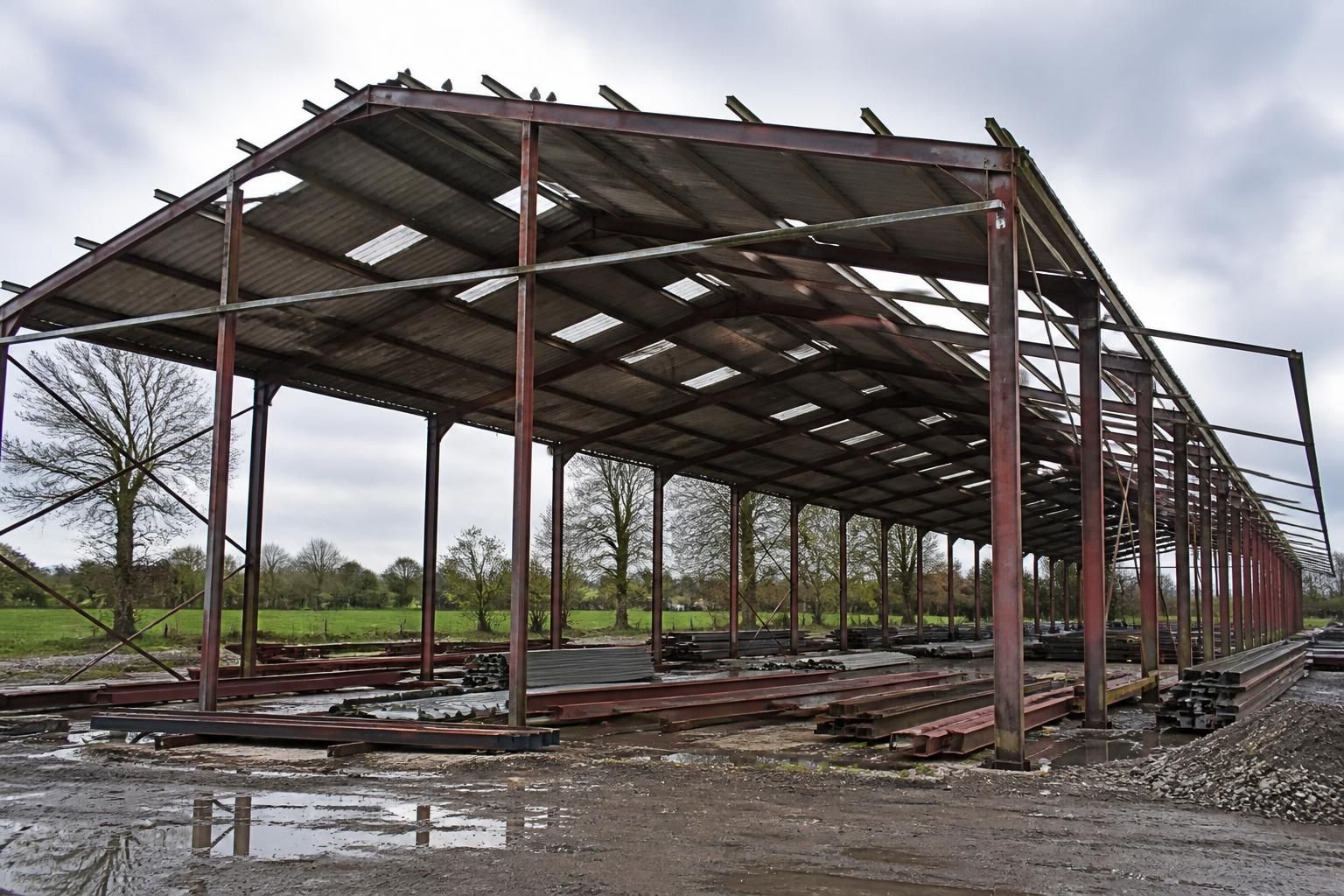
How is the price of a used steel building calculated?
The price of a used steel building is calculated from its size, specification and condition, together with the current value of the recoverable steel. Further costs may include dismantling, preparation, transport and any additional work needed to make the building suitable for its intended use.
The price of a used steel building is usually a composite valuation: it reflects the usefulness of the existing structure, the quantity and resale value of its components, and the work required to recover and reuse them. The same building can therefore have a different value depending on its specification, condition and the requirements of the proposed site.
The first stage is to establish exactly what is being sold. A schedule may include portal frames, columns, rafters, purlins, side rails, bracing, cladding, rooflights, doors, gutters and associated fixings. Components that are absent, damaged or unsuitable for reuse reduce the value of the package. Drawings, member sizes and connection details are also important because they help confirm whether the frame can be adapted to the intended use without extensive redesign.
Dimensions affect value in more ways than overall floor area. The span, eaves height, bay spacing and roof pitch determine how useful the building may be for machinery, storage, livestock, manufacturing or other purposes. A frame with a clear internal span or a greater height may be more versatile than a smaller structure, while unusual dimensions can limit the number of suitable sites and increase the alteration work needed.
Condition is assessed component by component. Relevant points include corrosion, impact damage, distortion, deterioration of coatings, the condition of cladding, and whether bolts and other fixings can be recovered. Previous exposure, use and maintenance history may affect the expected serviceability of the steel. A building that can be dismantled with its members identified and kept in good condition will generally be more valuable than one requiring substantial repair or replacement parts.
The original design and the intended reuse must be considered together. Steelwork designed for one loading arrangement may not be suitable for another without engineering review. Changes such as additional openings, a different cladding system, altered internal loading or a revised bay arrangement can affect the final cost. Existing drawings and fabrication information can assist with assessment, but they do not automatically demonstrate that the re-erected building will meet the requirements of its new site. Site-specific design, foundations, planning matters and building regulations may need to be considered separately.
The recoverable steel has a baseline material value, but a complete, reusable frame can be worth more than its scrap value because the purchaser is acquiring manufactured members rather than raw material alone. Conversely, a frame with missing sections, uncertain identification or extensive defects may be valued closer to its material content. Current steel-market conditions can influence this part of the assessment, particularly where the structure has limited practical reuse potential.
Transport and recovery costs are normally evaluated alongside the building rather than treated as an afterthought. The appraisal may consider:
- the method and complexity of dismantling;
- sorting, marking and preparing members for transport;
- the number and type of loads required;
- access restrictions at the original or new site;
- repairs, replacement fixings or additional steelwork; and
- reassembly and any alterations needed for the new layout.
These items help distinguish the advertised price of the used building from the overall cost of putting it into service. A lower purchase price does not necessarily represent better value if the structure requires extensive remedial work or difficult recovery. Equally, a building with a higher initial price may be more economical when it includes a complete, well-documented package with fewer missing or unsuitable components.
A sound calculation therefore begins with an accurate component schedule and available drawings, followed by a condition and suitability assessment. The proposed use, new dimensions, site constraints and required alterations can then be used to identify the likely additional work. Any quotation should make clear which elements are included in the purchase and which are priced separately, including dismantling, transport, erection, design work, foundations, cladding changes and taxes where applicable.
For a reliable assessment, provide the available building drawings, dimensions, photographs, component list and details of the intended site and use. Buildings UK Ltd can use this information to help assess whether a used structure represents a practical proposition and whether the quoted price reflects the work needed to reuse it.
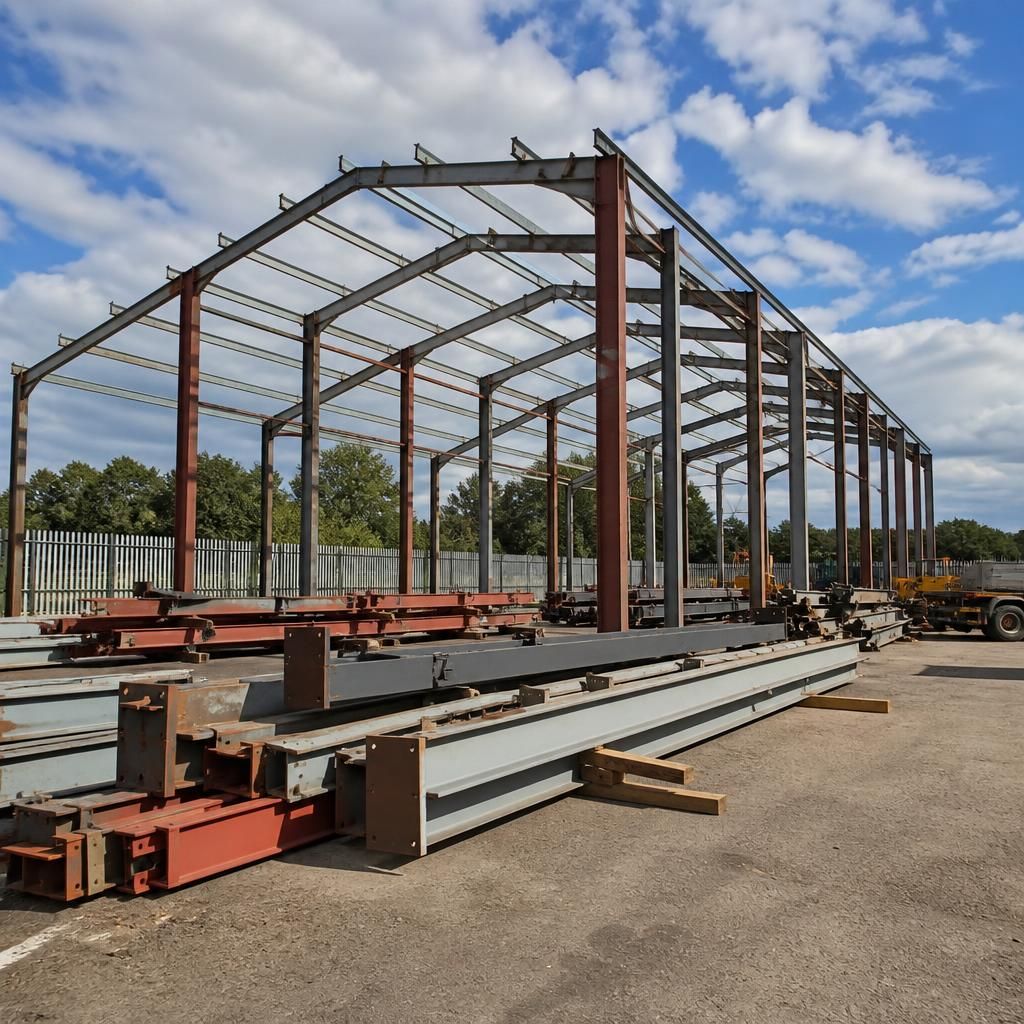
The age of a used steel building is not, by itself, a reliable way to calculate its price. A newer frame may have limited value if important members are missing or damaged, while an older structure can remain commercially useful when its steelwork is identifiable, complete and suitable for reuse.
For this reason, valuation focuses on the condition and usefulness of the individual components rather than applying a simple age-based reduction. Clear records, consistent member identification and evidence of careful dismantling can support the value of a reusable package, because they reduce uncertainty when the purchaser assesses what can be incorporated into the proposed building.