
What is included with a used steel building purchase?
A used steel building purchase normally includes the second-hand structural components listed in the agreed specification, with any available drawings or supporting documentation. Confirm whether cladding, doors, fixings, dismantling, transport and re-erection are included, as these items may be priced or arranged separately.
A used steel building purchase includes the components and documents identified in the agreed written specification, rather than automatically representing a complete, ready-to-use building. The specification should identify the steelwork being sold, its condition, the available information for reassembly and any items that are excluded from the transaction.
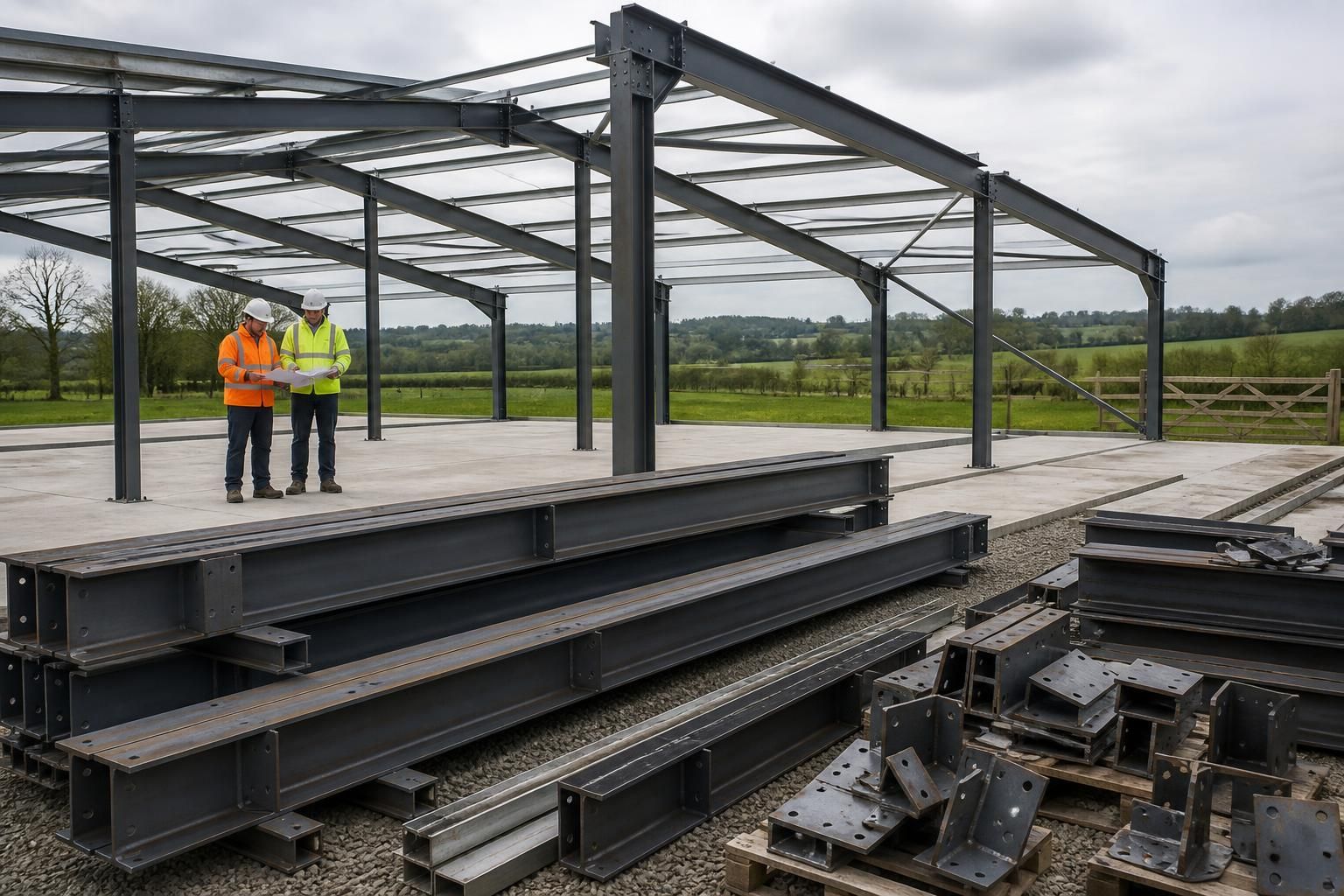
For the main frame, the included steelwork may comprise portal columns, rafters, end frames, connection plates, haunches, eaves members and bracing. The precise combination depends on how the building was originally designed and what has been recovered. Members should be identifiable against a marked-up schedule or dismantling record so that the purchaser can establish which pieces belong to the building and whether any are missing.
Supporting information can include the original general arrangement drawings, member layouts, connection details, dimensions and erection notes where these have been retained. These documents are useful for checking the proposed arrangement, assessing whether the building suits the intended site and giving an engineer the information needed for any further design work. Original documents should not automatically be treated as evidence that the building will meet the requirements of a new site; local conditions, use, loading and current design requirements may need separate assessment.
The condition information is also part of what should be understood before purchase. A suitable record should identify visible corrosion, distortion, drilled or modified members, damaged connection points and missing components where known. Steel that has been dismantled may show marks from previous fixings or handling. Any repairs, replacement sections or remedial preparation should be recorded rather than assumed to be included.
A clear purchase specification should separate included items from optional or separately arranged work. In addition to the structural frame, this may address:
- secondary steelwork, such as purlins, side rails and gable members;
- bracing, cleats, bolts and other connection hardware, where available and suitable for reuse;
- cladding sheets, trims, gutters and flashings, if specifically listed;
- doors, frames, windows and other building accessories, if they form part of the agreed package;
- drawings, schedules, photographs and dismantling records held for the building; and
- any technical review, design coordination or erection-related service stated in the quotation.
Fixings deserve particular attention because hardware removed during dismantling may be incomplete, damaged, unsuitable for the new arrangement or required to be replaced. Likewise, cladding and accessories may have been removed separately from the frame or may not match the dimensions of the proposed layout. The written schedule should therefore state quantities and descriptions where possible, not simply refer to a building by its former size or use.
Before committing to the purchase, compare the specification with the intended building arrangement and ask for written clarification of every item marked as available, optional or excluded. An engineer or suitably qualified designer may also need to verify the frame, connections, foundations, imposed loads and site conditions. This ensures that the purchase covers the materials expected while leaving technical changes, replacement parts and site-specific work clearly identified.
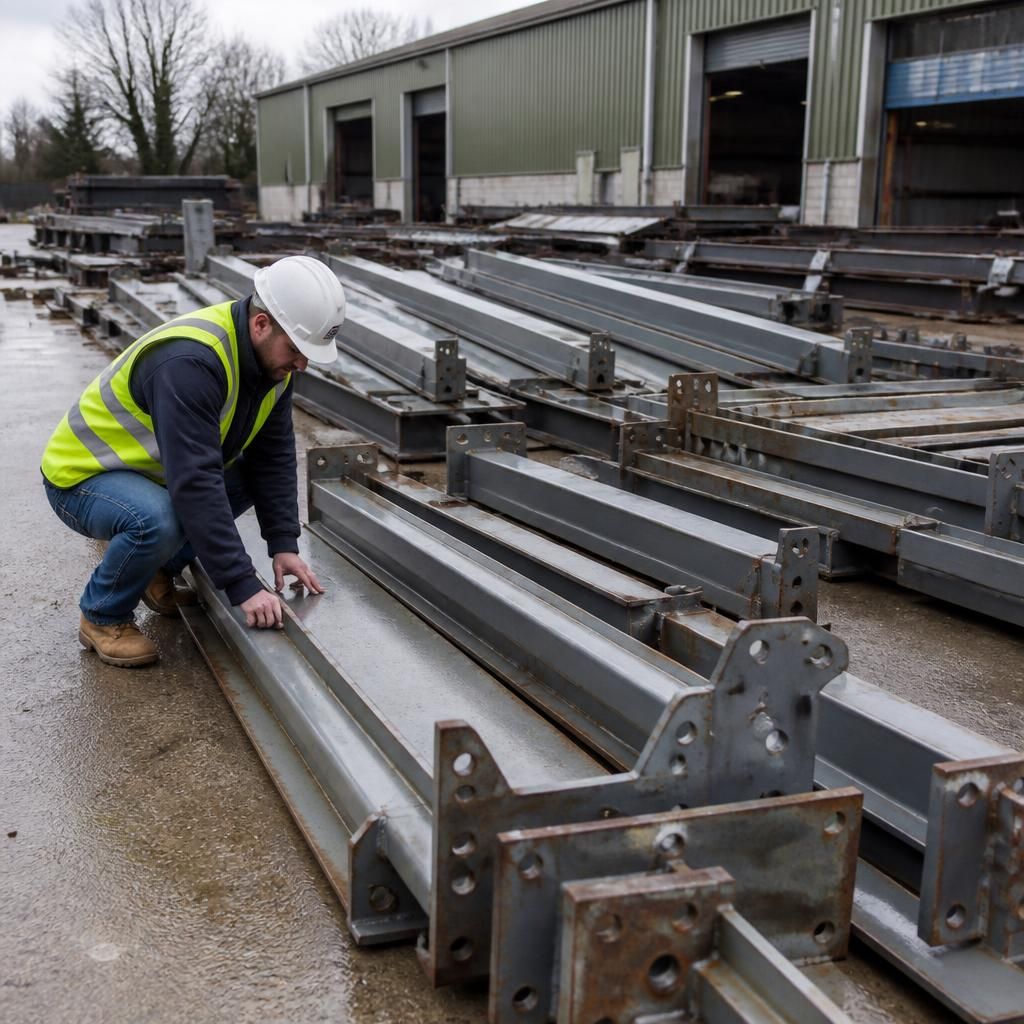
A used steel building purchase usually covers the reusable building package itself, not the work required to prepare and service the new site. Unless the quotation states otherwise, foundations, groundworks, drainage, electrical installations, heating, fire protection and other site services should be treated as separate requirements.
This distinction matters because the original building may have been designed for different ground conditions, access arrangements or operational needs. The purchaser may need new foundation drawings, ground investigation, planning information and building control approval before the frame can be reused. Any alterations needed to suit the new site should be identified and costed separately from the purchase price.
Ask for the quotation to state clearly whether it includes only the recovered building materials or also any design coordination, site preparation, delivery, assembly and associated construction work. A written division between the used building package and site-specific works makes it easier to compare proposals and identify responsibilities before the purchase is completed.